
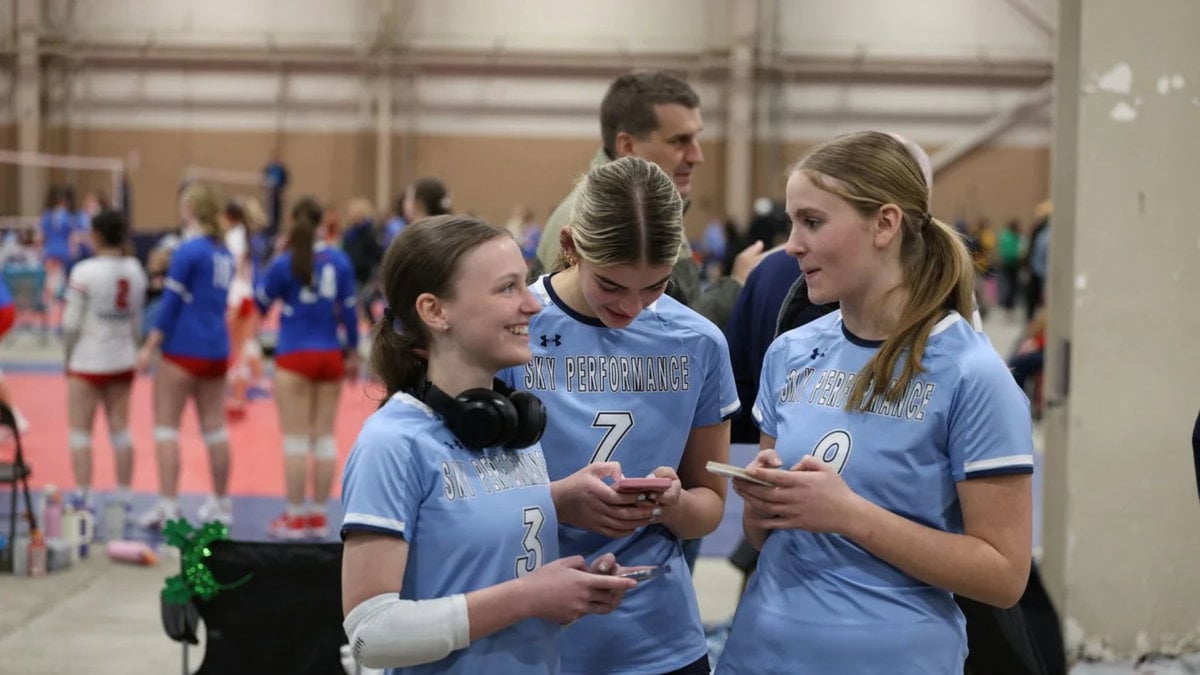
Key Takeaway: Athletes constantly on their phones isn't just about screen time — it's about how social media affects their self-worth and identity. It can fuel comparison, replace recovery time, and blur who they are beyond their performance.
What helps most: watch how your athlete feels after scrolling (not just how long), start open conversations with curiosity rather than rules, set simple phone-free boundaries at home (bedrooms, mealtimes), and remind them their value isn't measured in likes or highlight reels.
The goal isn't to take the phone away — it's to help them stay grounded in who they are off the feed.
You’ve probably seen it before. Your athlete finishes a game, and instead of talking about how they felt, how they played, or what they learned, they reach for their phone.
Within seconds, they’re scrolling, checking, and refreshing all of the content on their feeds. As a parent, it can leave you wondering whether this is just part of growing up today or if it’s affecting them more than you realize.
It’s important to say this clearly: you’re not wrong for feeling concerned, and you’re not alone in trying to figure it out. Social media is a normal part of your athlete’s world. It’s where they connect, express themselves, and stay socially engaged.
But at the same time, it’s shaping how they see themselves as both an athlete and a person, often in ways that are quiet and easy to miss.
This isn’t about blaming technology or taking their phone away. It’s about understanding what’s happening beneath the surface so you can better support the athlete you care about most.
Because behind every scroll, every post, and every comparison is a young person still learning who they are and looking for reassurance along the way.
The Reality of Social Media

Social media itself is not inherently bad. Research consistently shows that it can have both positive and negative effects depending on how it is used and how it makes a young person feel.
It can create connection, inspiration, and opportunity, but it can also introduce stress, comparison, and emotional pressure.
For athletes, that balance becomes even more delicate. Your athlete already lives in a world where they are constantly being evaluated through tryouts, playing time, performance, and feedback from coaches and teammates.
When social media is added on top of that, evaluation no longer ends when the game is over. Instead, it follows them home and into their everyday life.
They begin to see who is getting more recognition, who appears more confident, and who seems to be succeeding both on and off the field.
Over time, this can create a subtle but important shift in how they think. Instead of focusing on their own growth, they may begin to measure themselves through comparison.
As a parent, this is not something you caused, and it's not something you can completely control. However, understanding it allows you to step in with awareness, empathy, and the kind of support that can make a meaningful difference.
At ISNation, our coaches work closely with parents and athletes to help reframe this challenge — providing the tools and perspective needed to navigate the pressures of social media, so your athlete feels seen, supported, and empowered to perform at their best.
And that support starts with shifting the conversation — not just around how much time your athlete spends on social media, but what they're actually experiencing while they're on it.
Quality Rather than Quantity
When parents think about social media, the focus is often on how much time their athlete is spending on it. However, what research and experience continue to show is that the amount of time is only part of the picture. What matters just as much, if not more, is what your athlete is experiencing during that time.
Experts increasingly emphasize that the quality and positivity of the experience has a greater impact than screen time alone. There is also another layer that often goes unnoticed — what social media is quietly replacing. It may be taking the place of sleep, real-life conversations, or moments where your athlete would normally reflect and reset after a tough practice or game.
Over time, these small trade-offs can create a subtle but meaningful shift. Your athlete may have less space to process their emotions, less time to recover, and fewer opportunities for genuine connection.
Here are a few simple ways to start paying attention to this in your own home:
Notice: Does your athlete seem more irritable or withdrawn after time on their phone? That reaction may say more than the minutes spent.
Try this: Next time your athlete comes home after a hard practice, notice whether they reach for their phone before you've had a chance to connect. That small window is worth protecting.
Track this: For one week, note what your athlete does in the 20 minutes after a game or practice. Is it scrolling, or something that helps them genuinely unwind and reset?
What You Can Do (Without Fighting your Athlete)
One of the best ways to support your athlete is to start with conversation. Approaching the topic with curiosity creates a safe space for them to share their experience.
Start the Conversation

Asking simple, open-ended questions about how social media makes them feel can help them reflect and allows you to better understand what they are going through. Instead of reacting to screen time, lead with genuine curiosity. Here’s how you can start the conversation:
"Hey, I've been thinking about how much athletes see on social media now. What's it like for you when you're on it? Do you feel better after, or does it ever get overwhelming?"
"Have you ever seen something online after a game — a comment, a post, someone else's highlight reel — that stuck with you, good or bad?"
"When you're having a tough week with training, do you find yourself scrolling more? What does that feel like afterwards?"
Set Boundaries Around Phone Use
It is also important to protect the areas that matter most for their wellbeing — sleep, recovery, and focus. Setting limits around phone use, especially before bed, is less about restriction and more about supporting their performance and overall health. Here are some ways of doing this:
Choose one dedicated spot in the home — away from bedrooms — where everyone's phones charge overnight.
Set up a "downtime" window on your router so the wifi switches off automatically in the evenings. When using your phone around family, get into the habit of saying what you're doing out loud — it keeps everyone in the loop and encourages mindful use.
Finally, agree as a family to keep phones off the table at mealtimes. Small commitments like these can quietly reshape how your whole household relates to technology.
Help Strengthen Their Identity Off the Feed
Social media can blur the line between who your athlete is and how they perform or appear online — making it easy for them to feel their worth is tied to likes, comments, or how others respond to their results.
You can help counter this by regularly reinforcing their identity beyond the highlight reel. After a tough game — or even a strong one — try grounding them in what social media can't capture:
"I noticed you've been pretty quiet since the game. Sometimes it's easy to get caught up in what people are saying online, but I want you to know — what I saw today was your effort, your attitude, and how you showed up for your teammates. That's the stuff that actually matters."
At the end of the day, your goal is not to remove social media from their life. It is to help them understand it, navigate it, and stay grounded in who they are beyond it.
In the ISNation app, we have sports psychologists who show athletes how to manage big emotions and help them stay grounded in their identity beyond social media use as well as aiding you as the parent in navigating it.
Share this: "That sense of identity — knowing who they are beyond the highlight reel — is ultimately what your athlete needs most" — ISNation
What Your Athlete Needs Most
Social media isn’t going away, and it doesn’t have to be something you fear. But it is something your athlete needs help understanding.
Behind the highlights, the comparisons, and the constant noise is a young person still trying to figure out who they are. And while social media may influence that process, it doesn’t have to define it.
Because in a world that’s constantly telling them to look outward for validation, what they need most is someone helping them stay grounded in who they are.
Hear from sports psychologists, athletes, and coaches who've been in your shoes — and learn what actually helps.
Join us on the ISNation app and discover tools you and your athlete can use together.