
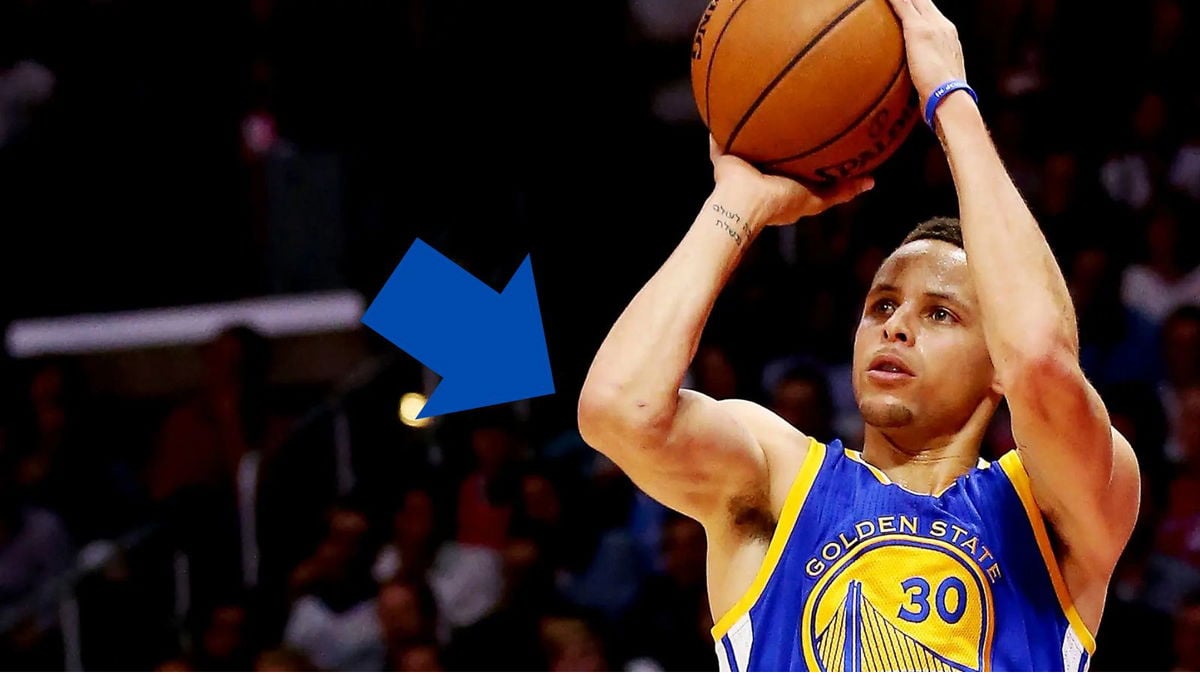
The alignment of the elbow has an impact on where the basketball travels when going for a shot. It is a shooting motion that keeps the elbow under the ball and promotes accuracy toward the rim of the basket. For players learning the game, elbow position can sometimes explain why shots miss left or right, even when the release feels on point. It is also important to note that other body mechanics may also play a part in missed shots.
Because shooting is a repeated motion for players, often performed hundreds of times each week, small errors can accumulate,e resulting in lost scoring chances. Learning correct elbow form early supports accurate shooting and helps limit unnecessary stress on the arm.
The Importance of the Shooting Elbow
The elbow functions as the hinge that directs the ball’s path when shooting. When positioned under the ball and in line with the shoulder, the forearm can extend vertically toward the basket.
A stable elbow also improves energy transfer. Force generated by the legs and torso moves through the shoulder, elbow, and wrist. If the elbow is misaligned, part of that force can go sideways, requiring correction from the wrist or shoulder. This form often leads to inconsistent range and missed shots that are difficult for players to correct.
Having consistent elbow positioning simplifies this shooting motion. Fewer moving parts need correction, which allows players to focus on timing and balance rather than adjusting the arm mid-shot.
Proper Shooting Form and Elbow Mechanics
Proper elbow mechanics begin with setup. The shooting elbow should sit directly under the ball, with the forearm close to vertical. From a side view, the elbow, wrist, and ball form a straight line aimed at the rim.
During the upward motion, the elbow should stay relatively close to the torso without being pinned inward. As the shot reaches its peak, the elbow extends upward rather than forward, allowing the wrist to finish the motion with a controlled snap.
Follow-through reflects the quality of the elbow form. A balanced movement leaves the elbow fully extended and pointing toward the basket, with the wrist relaxed.
Common Mistakes with Elbow Position
One frequent mistake is elbow flare, where the elbow points outward during the shot. This alters the release angle and often causes the ball to drift. Shoulder stress also increases when the elbow flares because the arm rotates outward under the weight of the ball.
Another issue appears when players pull the elbow too far inward. Although this may feel controlled, it limits the extension path of the forearm. Players often compensate by pushing the ball with the wrist, which reduces range and consistency.
Rushed shots create additional problems. This can occur under defensive pressure or fatigue, leading to inconsistent form.
Injury Prevention in Basketball Shooting
Shooting can place repeated stress on the elbow joint and surrounding tissues.
Injury prevention in shooting focuses on reducing unnecessary load. Proper elbow alignment distributes force across the arm rather than concentrating it at the joint. Training volume, recovery time, and strength all influence how well the elbow tolerates shooting. Proper elbow alignment is just one factor that can prevent injury, alongside other factors such as proper technique across the kinetic chain, like the legs and hips.
Common Injuries Related to Shooting Elbow
Overuse irritation around the elbow often develops gradually. Tendon discomfort may appear after long shooting sessions, especially when players rely heavily on the arm instead of generating force through the lower body.
Forearm muscle soreness is another common issue. Poor elbow alignment increases demand on the muscles responsible for stabilizing the wrist during release. Over time, this can limit shooting volume and reduce practice quality of practice.
Although acute elbow injuries are less common from shooting alone, persistent pain can alter form. Players may subconsciously change their form to avoid discomfort, which increases the risk of additional strain elsewhere in the arm or shoulder.
Strengthening Exercises for the Arm and Elbow
Strengthening supports the elbow by increasing the capacity of muscles and tendons to handle repeated shooting motions. Exercises targeting the forearm improve joint stability during release.
Upper arm and shoulder strength also matter. A stable shoulder reduces unwanted movement at the elbow, allowing the forearm to extend on a cleaner path. Controlled resistance exercises performed through a full range of motion support this stability.
Progressive loading is important. Light resistance with higher repetition builds endurance without excessive strain. Adequate rest between sessions allows tissues to adapt, supporting consistent shooting practice and reducing the likelihood of soreness limiting training time.
Stronger Mindset for Basketball Players
As a basketball player, being able to execute proper form in high pressure scenarios is essential for effective shooting at the rim.
ISNation was built to help athletes train their minds with the same effort they put into training their bodies, preparing them for competition and giving them an edge in sport and in life. Learn more about our mission and sign up to be an ambassador here.