
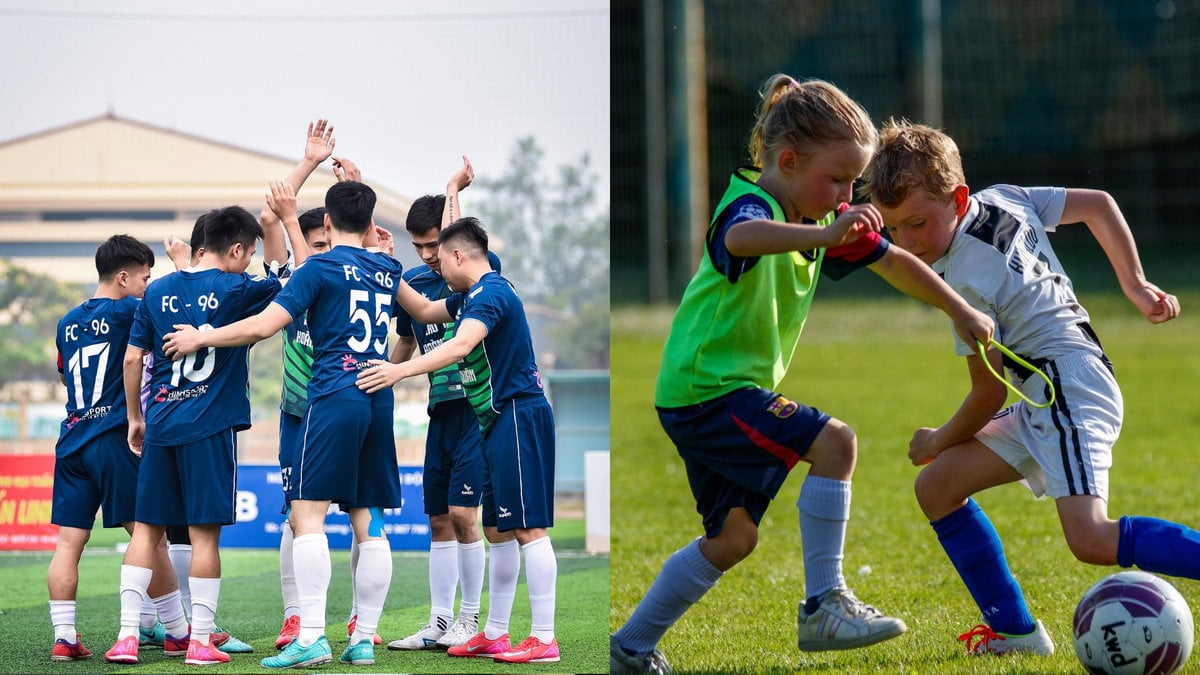
Soccer drills for kids must not only be good for improving skills for effective practice but also fun for sustaining engagement and enjoyment. This article lays out quick and fun soccer drills for kids that you can use as a parent or coach of a youth soccer team. It also provides a brief background on youth soccer development for context.
Youth Soccer Development
As children grow, the structure of drills used in practice changes. Younger players spend most of their time learning how to control the ball with different parts of their feet. Kid-friendly soccer drills often focus on stopping, starting, and changing direction, allowing young players to develop good levels of ball control.
In early age groups such as Under 6 (U6), sessions focus on simple tasks. Dribbling in open space, basic shooting toward a goal, and short bursts of movement help develop coordination for young players just getting into the game.
By the Under 12 level (U12), practices become more organized. Coaches should focus on passing accuracy, first touch, and awareness of teammates. Coaches often organize small-sided games to help individuals use their skills in team play.
Some of The Best Soccer Drills for Kids
The ideal soccer drills for kids combine practice and improve young players' abilities to make decisions. Coaches should focus on practicing basic movements first and then applying skills in situations that would happen in a real match.
Soccer Drills for U6 Players
Simple dribbling games work well with younger athletes - ‘Red Light, Green Light’ and ‘Sharks and Minnows’ are just two examples of these.
Red Light, Green Light
In ‘Red Light, Green Light’, each player dribbles in an open area. On the shout of “Green light,” by a coach, players move forward with controlled touches. On “Red light,” players stop the ball under their feet. This activity develops ball control and quick reaction times around other players.
Sharks and Minnows
“Sharks and Minnows” builds on simple dribbling movements by introducing light pressure that you would find in a normal game. A few players act as sharks without a ball, while the rest dribble across the field. If a shark kicks a player's ball away, they join the sharks. Dribbling while avoiding defenders improves player awareness of other players and builds skills in protecting the ball.
Cone Dribbling
Cone dribbling courses are another good drill coaches can use to improve ball control for U6. In this drill, several cones are set out in a line, players must weave through them using small, controlled touches, focusing on keeping the ball close rather than rushing. After mastering one foot, players move onto the other.
Moving Target
Setting up a moving target for young players to aim at can improve shooting skills at a beginner level. In this drill, a 20x20 yard space should be set up, and each player should be given a ball. Players must dribble while attempting to hit you with the ball as you attempt to avoid.
1v1 Shooting
In 1v1 shooting, a goal is set up, defended by a goalie. Players must dribble and shoot at the goal to attempt to score. Outside of the penalty area (about 7-8 yards), a cone is set up where players must stand and await their turn. Each player takes turns trying to score one after another. Using cones, a small grid should be set up in the penalty area for players to take a shot at the goal.
Soccer Skills Drills for U12
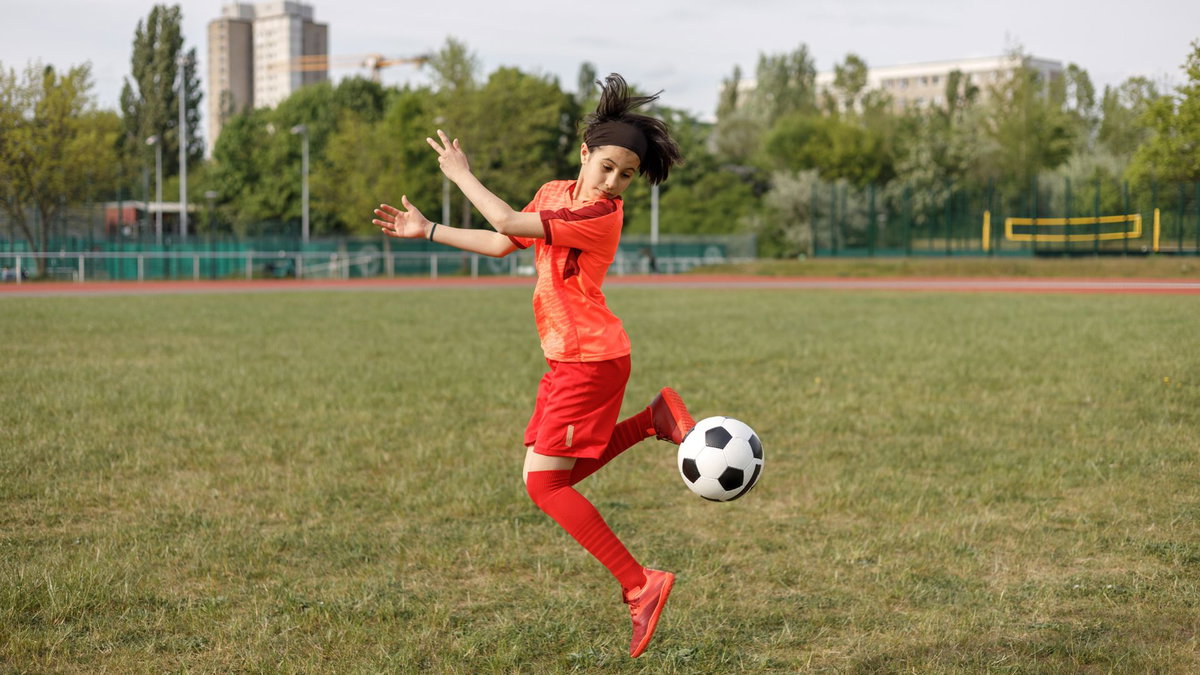
With older players, the focus should be on more structured drills that continue to build on the basic skills learnt at younger levels. For example, the ‘simple passing drill’ builds on ball control and passing.
Simple Passing Drill
In this drill, two lines of players face each other, passing the ball to one another. The receiving player accurately stops the ball under their foot, and players switch sides. This drill improves accuracy and movement of players after passing the ball, as well as ball control when receiving it.
Triangle Passing
Coaches may also add triangle passing to add complexity to passing to further improve first touch basics and awareness of space. In this drill, three players form a triangle and pass around the triangle. After passing, they move to a new position within the triangle.
Small Gates
When expanding on dribbling basics, small gates can be created using pairs of cones to improve the directional dribbling of players. Players must dribble through as many gates as possible within a set time. The idea here is to instruct players to keep their heads up while controlling the ball, to improve a player's sense of direction and awareness while keeping good dribbling form.
World Cup Soccer Drill
In this drill, four groups of players in threes are set up in the penalty box and attempt to score at the goal. Each team must compete against one another to score, using their passing, dribbling, and shooting skills to get the advantage. If a team scores, they progress to the next round. The last team to score gets eliminated.
1v1 Shooting but with Pressure
Much like the basic version of 1v1 shooting outlined above, a goal is set up, which is defended by a goalie, with players taking turns to shoot. However, this time, the penalty area is also guarded by a defender. Players must try to dribble around and avoid the defender while trying to make an accurate shot on goal. For added pressure, two defenders can also be used to increase difficulty. This drill focuses on simulating real game pressure by adding defenders to play when shooting.
2v2 Drills to Enhance Teamwork
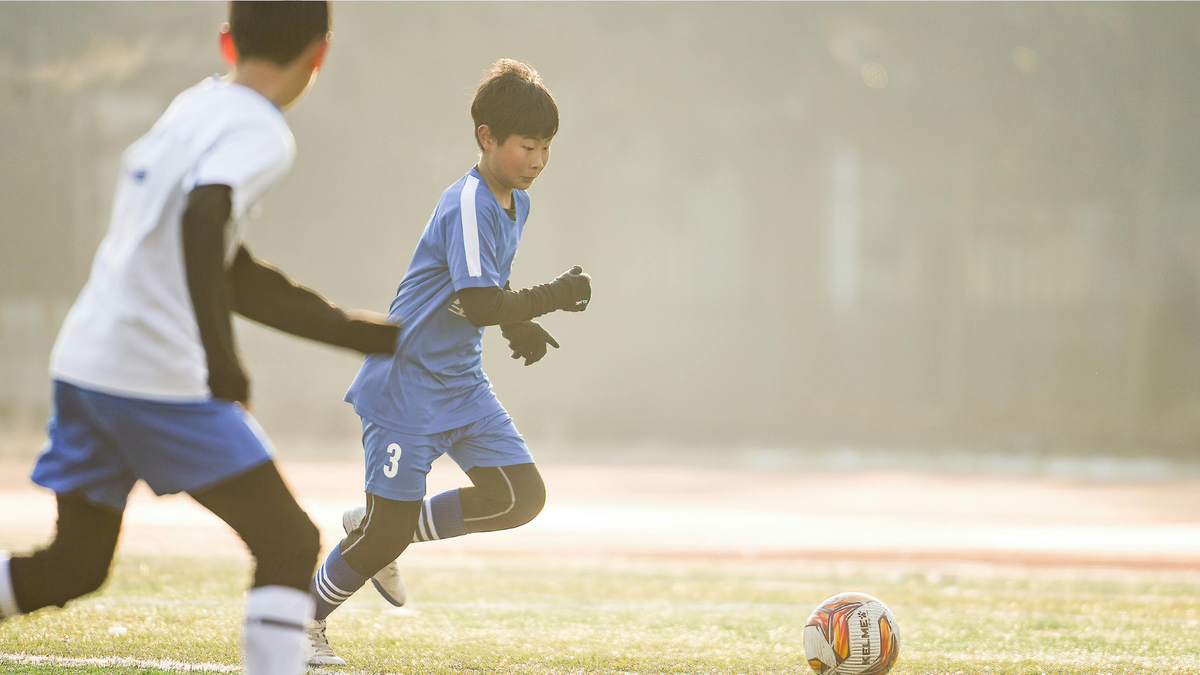
As mentioned above, short game scenarios such as 2v2 games can be a great way to improve soccer skills for players.
In two versus two games, four players (two on each goal) must defend their own goal while trying to shoot.
In this game, the objective for each player is to score while still keeping possession of the ball, using open communication to protect the home goal while trying to attack.
How these games are set up can be adjusted to suit skill levels and to practice different techniques. For example, coaches and parents can set up games that:
Require at least one pass before a shot.
Count goals only if both teammates touch the ball.
To set this up, place two mini goals 15x15 or 20x15 yards apart from one another, placing two players on each goal. Players must defend while trying to gain possession of the ball and score.
Playing these small games across short rounds with frequent rotations can help keep energy levels steady and allow players to practice dribbling, passing, and shooting skills under pressure by allowing more touches per minute.
While drills for kids should be effective in skill development, to build a strong foundation for play, they must also be, most importantly, fun. By using the above drills, coaches and parents can continue to build on youth soccer skills while still making sure they are enjoying practice.
ISNation was built to help athletes train their minds with the same effort they put into training their bodies, preparing them for competition and giving them an edge in sport and in life. Learn more about our mission and sign up to be an ambassador here.