
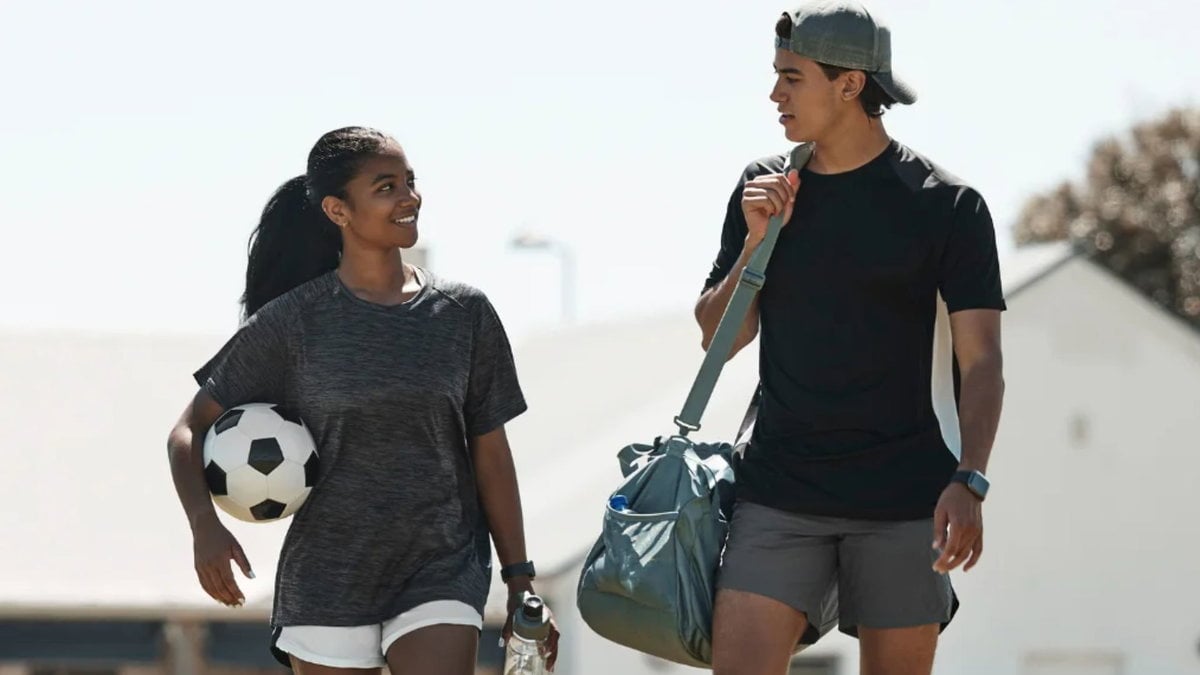
Key Takeaway: Most sports parents are all in — the early mornings, the long drives, the games in the rain — but still feel completely lost in the quiet moments when their athlete is struggling and won't open up. The key insight is that confidence isn't a personality trait your child either has or doesn't; it's a trainable skill, built the same way every other athletic skill is built — through deliberate, consistent practice.
The simplest place to start to build confidence is a two-minute daily routine: box breathing paired with a personal self-talk anchor ("I am ready," "I belong here"), ideally done together in the car on the way to practice. Your involvement in that small ritual matters. The ISNation app is built to give parents exactly this — the tools, the habits, and the community to support their athlete's mental game, not just their physical one.
You do everything for your athlete.
You rearrange your schedule for early morning practices. You sit in the cold, the heat, the rain. You drive the miles, pay the fees, wash the uniforms, and show up to every game — even the ones they'd rather you weren't watching.
You are all in.
But there's one moment that stops every sports parent cold. It's not the missed shot or the tough loss. It's the quietness after a game when you can feel something is wrong — and you have no idea what to say.
You want to help. You just don't have the tools.
That's not a parenting failure. That's a gap no one prepared you for. Supporting your athlete's mental and emotional game is just as important as everything else you're already doing — and it doesn't have to be complicated.
It starts with two minutes a day.
Confidence Isn't Something They're Born With
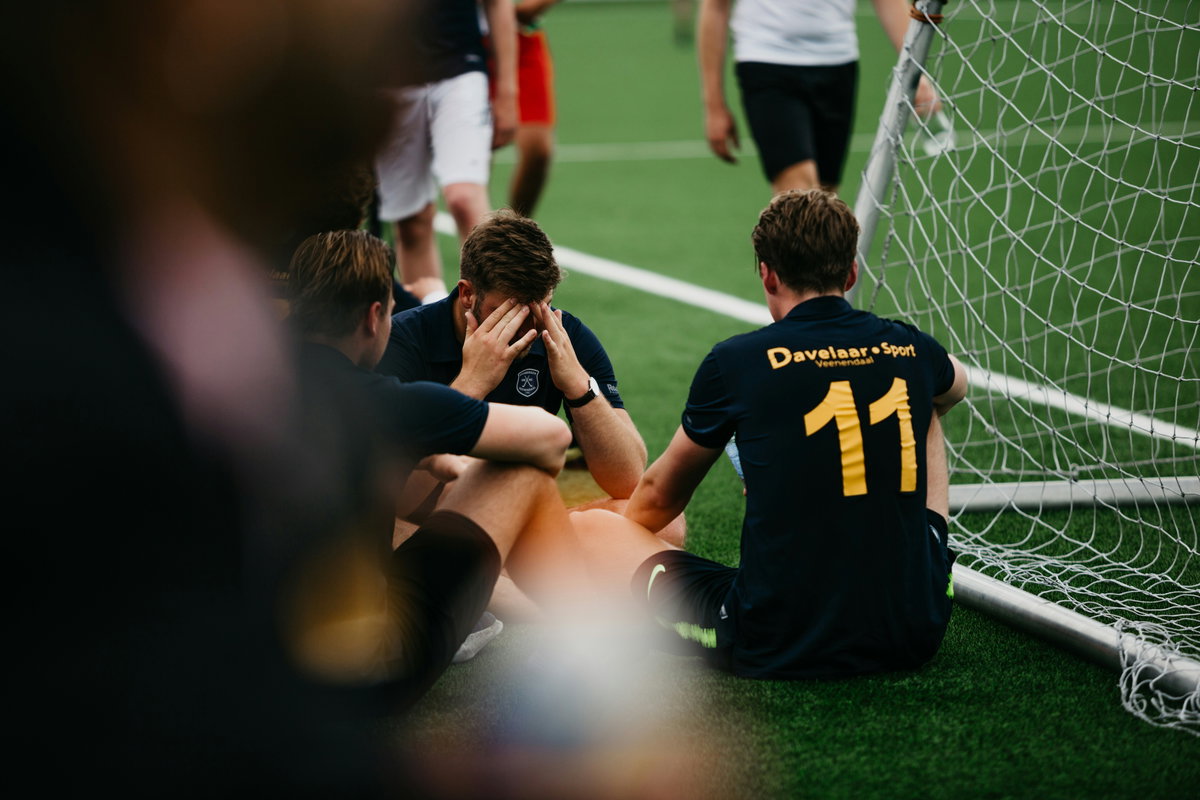
Most parents think confidence is something their athlete either has or doesn't have. A personality trait. An inborn quality.
So you wait. You wait for the big game where it finally clicks. The coach who sees something in them. The moment the self-doubt disappears.
But here's what the research is telling us: waiting doesn't work.
The latest findings in neuroscience and psychology confirm that confidence is not a fixed trait — it is a trainable skill. And like every skill your athlete has worked to develop, it has to be practiced. Deliberately. Consistently. Over time.
Research conducted with athletes across multiple sports found that those who developed a growth mindset and practiced positive self-talk showed significantly greater confidence and motivation — not because they were naturally wired that way, but because they trained their minds the same way they trained their bodies.
What athletes say to themselves matters more than what anyone else says to them. The internal dialogue running through an athlete's mind before, during, and after performance has real power.
The athletes who seem naturally confident? They've simply had more repetitions thinking about themselves the right way. That's not luck. That's a habit. And it's one any athlete — including yours — can build.
The Simplest Confidence Tool Your Athlete Isn't Using
So what does a two-minute confidence habit actually look like?
Not a long journaling session. Not a motivational speech. Not another thing added to an already packed pre-game routine. It's something your athlete can do standing on the sideline, sitting in the locker room, or riding in the back seat on the way to the game.
It's breathing. And it works.
Several studies have shown how deep, diaphragmatic breathing can slow heart rate and reduce blood pressure. This kind of breathing reduces the fight-or-flight response that causes feelings of anxiety and tension — giving athletes a chance to manage stress levels and calm themselves down in just a few moments.
But this isn't just about calming nerves before competition. Done consistently, breathing and grounding practices do something much deeper — they train the brain to return to a place of steadiness under pressure. And that steadiness is where confidence lives.
Research indicates that controlled breathing lowers cortisol levels, which can reduce stress and anxiety during competition. Athletes who practice these techniques can see increased confidence and mental clarity, leading to better decision-making.
The 2-Minute Routine — Start Here
Step 1: Box Breathing (2 minutes, 4 rounds)
Breathe in for 4 counts → Hold for 4 → Out for 4 → Hold for 4. Repeat.
Use it before a game, during a timeout, or any time the pressure spikes. Two minutes. Four rounds. That's it.
Step 2: A Self-Talk Anchor
Pair the breathing with one grounding phrase — something your athlete says to themselves before the game gets to say anything to them. Examples:
"I am ready." "I've done the work." "I am strong." "I belong here."
Help your athlete find their anchor by asking: "What's one thing you know is true about yourself as an athlete, no matter what happens today?"
Step 3: Make It a Shared Ritual
Do it together in the car on the way to practice. No pressure, no performance — just two minutes, side by side. That consistency is how a habit forms. And that habit is how confidence gets built.
Share this: "Two minutes a day. Same time. Same routine. That's how confidence gets built — not in the big moments, but in the small ones you choose to show up for." — ISNation
The Role Only You Can Play

Positive involvement helps young athletes build stronger self-confidence, enhances their ability to cope with competitive stress, and fosters a deeper commitment to their sport. It's not about being the loudest voice in the stands. It's about being a steady presence in the quiet moments.
So here's what you can do today. Introduce the breathing and self-talk habit together. Do it with them in the car on the way to practice.
You don't need to be a sports psychologist. You just need to show up — daily, with intention. Two minutes. One anchor. One breath.
That's where confidence begins. Not in the trophies or the big moments. It begins in the small, daily act of a parent stepping in — without words — and saying through their presence: I see you. I'm with you. You are not alone.
That's love. And love is the most powerful thing your athlete has.
ISNation exists for this moment — the one between the athlete and the person who loves them most. If you're ready to build the kind of connection that keeps your athlete grounded, growing, and in the game, join the community on the ISNation app.