
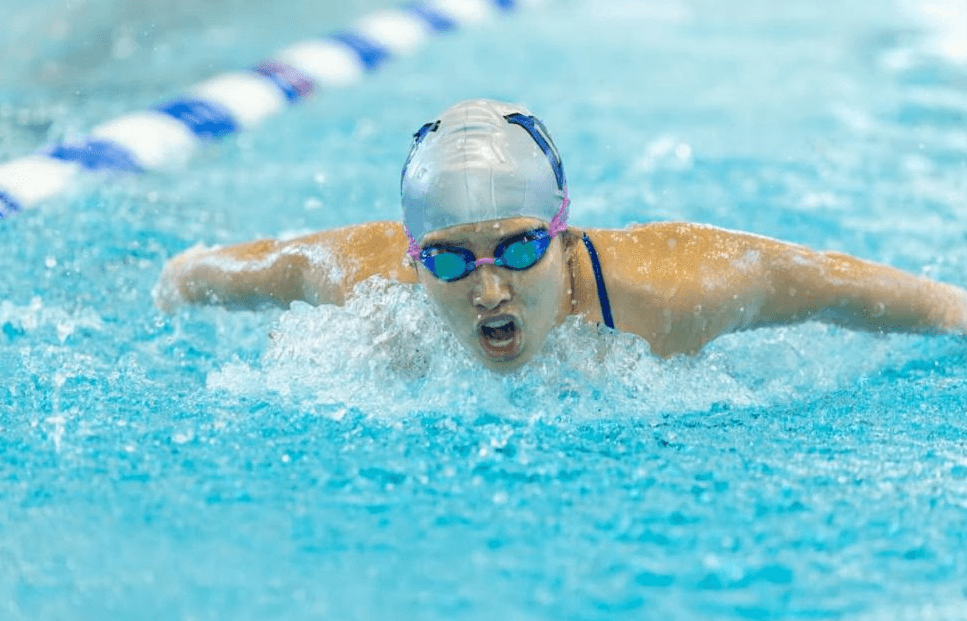
I grew up in the distance lanes under Mark Schubert. If you know swimming, you know that name carries the weight of thousands of miles and a "no-excuses" philosophy that can either forge you into steel or break you into pieces. I was training for the long grinding yardages until my limbs felt like lead weights and my mind felt like a frayed wire. I was disciplined, I never missed a practice and I never cheated a turn, but I had hit a plateau that felt like a brick wall. I felt that I not only had fatigue from my body, but also the psychological exhaustion of doing the same thing over and over and expecting a different result.
I was surviving, but I wasn't thriving
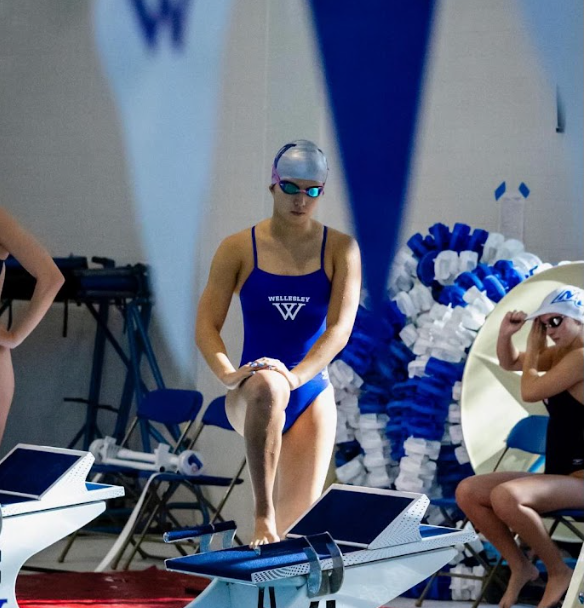
The shift happened when I started working on sprint-specific training with Irvine Nova Aquatics, an elite, high-performance swim club in Southern California. For the first time, I wasn't just floating above the water, I was starting to feel the momentum in the water. It wasn't about exerting my whole strength in the water; it was about the angle of my pinky on the entry, the precise tension in my core during a breakout, and the intentionality behind every stroke count. I learned that hard work is a baseline, but detailed precision is where the magic happens. I began to realize that the aerobic work that I had put into in the past became the foundation of what I am working on now.
I fought back against the plateau. I hit the goals I had written for myself. I felt like I had finally begun to find a new version of myself.
But then came the transition to college.
My NCAA D3 Swimming Journey
When I arrived at Wellesley, I expected to carry that same momentum into the NCAA D3 environment. Instead, I started to fade. It was a slow, agonizing loss of confidence. Suddenly, the water felt heavier. The times that used to come naturally were slipping away.
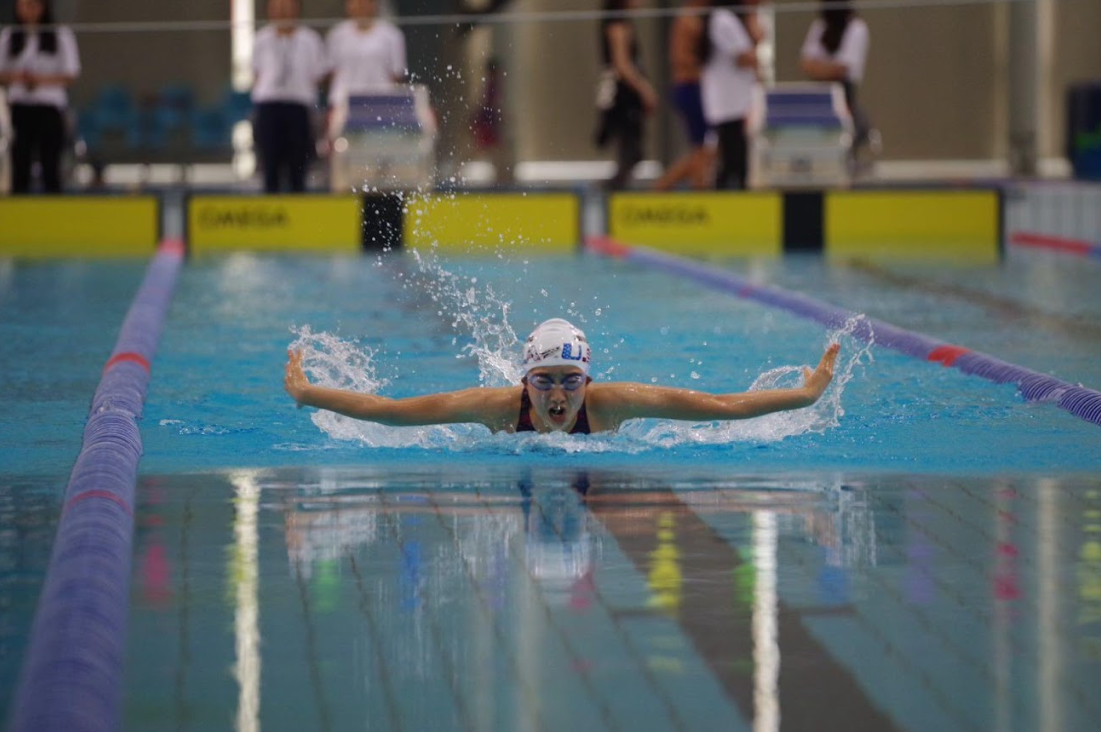
I found myself staring at the black line at the bottom of the pool, gripped by a level of self-doubt I had never known.
I stopped trusting the process. More importantly, I stopped trusting myself.
In the middle of that fade, my mental health became a crucial issue. Resilience is easy to talk about when you’re winning; it’s a much harder thing to practice when you feel like you’re failing in front of your teammates every day.
There were mornings when the smell of chlorine made my stomach turn, not because of the workout, but because of the fear that I wouldn't be enough again.
To find my way back, I had to return to the concept of iteration.
Iteration sounds like a technical term, but for an athlete, it’s a lifesaver. For a long time, I thought of my talent as something I either ‘had’ or ‘didn't have’. If I swam a slow time, I thought it meant the fast version of me was gone forever. But iteration taught me that I am in the process of achieving my goals, working in progress that is being updated.
Iteration is An Athlete’s Superpower
I stopped worrying about finding that one perfect, magical performance that would prove to myself that I was good enough. Instead, I began to see each practice as a new version of myself.
Some of my versions have made me more confident. Some of my versions made me focus on techniques. But you don't rewrite the whole program just because the day before was hard. You just show up the next day and iterate. You fix one small thing, maybe your head position, or the way you talk to yourself in the main set.
I have come to realize that confidence is not something you wait for; it’s something you develop.
It is something you get by showing up over and over again, even when your hands are shaking and you’re unsure of the outcome.
I have come to realize that being scared does not mean you are not ready. It just means you care. It means you’re able to challenge yourself in a way that makes you feel vulnerable. It means you’re about to get stronger.
Stronger athletes aren't the ones who never feel fear; they are the ones who focus on the process and the habits when the fear is at its loudest.
Today, I still deal with the shadows of self-doubt. But I also have the resilience of a girl who survived the distance sets and the wisdom of a woman who learned that she is the architect of her own progress.

To the athlete reading this who feels like they are fading: Trust the iteration. Your struggle isn't a sign that you've lost your way; it’s just the next set. Put your face in the water, find your intentionality, and remember that deep inside, the pain is only where the strongest version of you is currently being built.
I’m still fighting. And I’m still iterating.