

Key Takeaway: Comparison often feels painful because you are usually measuring your current chapter against someone else’s best moment. You do not have to quit caring about goals, but you do need to stop letting external factors harm your confidence. Your path gets clearer when you return to your own work, your own timeline, and the people who know the full version of you.
The highlight is not the whole story
You open your phone for a minute, and suddenly everyone looks like they're way ahead of you. Someone got an offer. Someone posted a training clip. Someone made a team, hit a personal best, or looked effortless doing the thing you have been struggling with. You were fine five minutes ago. Now your chest feels tight.
Comparison does not always announce itself as jealousy. Sometimes it sounds like motivation. Sometimes it sounds like honesty. But if you leave the app feeling smaller, more frantic, or less proud of your own progress, that doomscroll is costing you more than it is giving you.

Celebration posts can make comparison feel instant and convincing.
Your brain is missing context
The APA advisory on adolescent social media use notes that online experiences can shape comparison, mood, and wellbeing. In sports, that effect can be intense because athletes are not only posting life moments. They are posting proof: proof they are working, winning, improving, being chosen.
But you are rarely seeing the whole picture. You do not see the injury they are hiding, the anxiety before the clip, the bad practices, the family stress, or the hundred ordinary days that did not make the post. You are comparing your behind-the-scenes to their edited evidence.
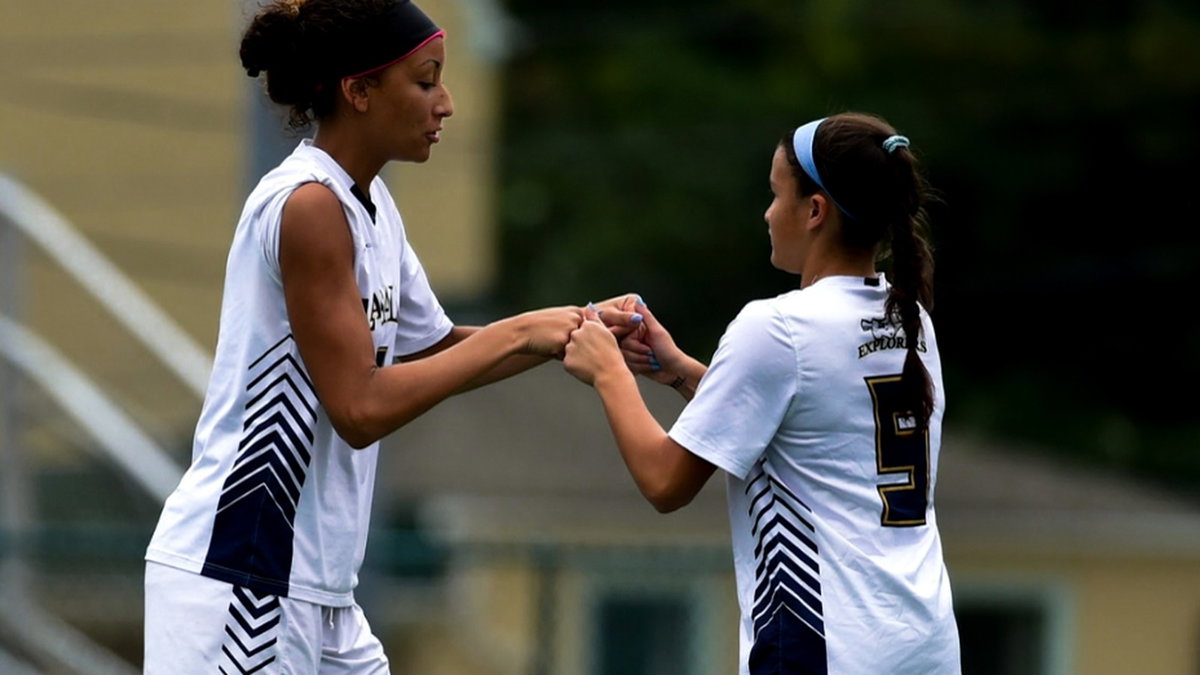
Your path gets clearer when support matters more than comparison.
Use the signal without letting it own you
Sometimes comparison shows you something useful. Maybe you do want to train with more intention. Maybe you do need to ask for feedback. Maybe someone else’s progress reminds you of a goal you care about. That part is information.
The problem starts when information becomes identity.
“They improved” is information. “I am falling behind” is a story.
“They got noticed” is information. “No one will ever notice me” is a story. Learn to catch the difference.

Confidence grows when athletes return to their own work and timeline.
Build a boundary that actually works
You do not have to delete every app to protect your confidence, though sometimes a break helps. Start smaller. No scrolling right before practice. No checking rankings before bed. Mute accounts that make you spiral, even if they are not doing anything wrong. Your attention is part of your training environment. Treat it that way.
If phones have become a pressure point, ISNation’s article on athletes and screen time can help you think about what the screen is doing to your mood, not just how many minutes you spend on it.
Return to your lane
Write down three things that are true about your own path right now: one thing you are improving, one thing you are learning, and one person who supports the full version of you. Keep it simple. The point is to come back to reality.
Keep one private record of growth that no one else grades. It can be a note in your phone after practice: one win, one lesson, one next step. Over time, you will build proof that your path is moving, even when it is quiet. That proof matters on the days the internet tries to convince you everyone else is already there.
You are allowed to want more. You are allowed to chase big goals. Just do not let someone else’s highlight become the place where you measure your worth. Your path does not need to look loud to be real.
Make your feed match the athlete you are trying to become
This is a big one. This is how you make your tech start working for you rather than against you.
Your online environment can either support your growth or constantly pull you away from it. Take ten minutes and look honestly at the accounts you follow. Which ones teach you something? Which ones inspire you without making you feel worthless? Which ones make you anxious, jealous, or desperate to prove yourself? You do not need to judge the people behind the accounts. You just need to decide what belongs in your training environment.
Muting is not dramatic. Unfollowing is not weakness. Taking a weekend off is not falling behind. It is you protecting your attention so you can use it where it matters: your recovery, your practice, your schoolwork, your relationships, and your actual life.
You can celebrate others without disappearing
One of the healthiest goals is not to stop noticing other athletes. It is to stop losing yourself when you do. You can be happy for a teammate, learn from a competitor, and still stay committed to your own timeline. Their success does not automatically say something negative about you.
When someone else has a big moment, try saying, “That is their moment. Mine will come.” It may feel simple, but simple words can interrupt the spiral before it takes over the rest of your day.
At ISNation, we believe mental fitness belongs in the everyday moments of sport: the car ride, the comeback, the quiet night after a hard game, and the brave decision to ask for support. Start with Love, then build from there. Check out the ISNation app to join our community.