

Key Takeaway: Showcases can feel huge because they mix performance, money, visibility, comparison, and future hopes into one weekend. Your athlete may need help separating preparation from panic and opportunity from identity. Parents support them best by lowering the emotional temperature, naming what is controllable, and reminding them that one event is information, not a verdict on their worth or future.
The pressure may start before you even arrive
The showcase is still days away, and your athlete is already different. They are checking the schedule again. Asking who will be there. Wondering if coaches will notice them. Comparing fields, teams, clips, stats, rankings, uniforms, and everything else that suddenly seems like it might matter.
You may feel it too. The cost, the travel, the registration, the hope that this weekend opens a door. It is easy for everyone in the house to start acting like one event is not just an event, but a test of whether all the work has been worth it.
That is where the pressure gets heavy. Your athlete may not say, “I am scared this will decide my future.” They may say, “I have to play perfect,” or “If I mess this up, I am done.” Listen for the fear underneath the sentence.
Why showcases can feel so much bigger than games
A normal game can be stressful. A showcase can feel like a game with invisible judges attached to every touch, swing, sprint, save, shift, or mistake. The athlete is not only trying to compete. They are trying to be seen, remembered, evaluated, and chosen.
What makes this especially hard is that much of the process is outside their control. They cannot control which coaches attend, what those coaches need, how many players are in their position, whether the field assignment helps them, or whether one moment happens in front of the right person. When athletes forget that, they may treat every outcome as a personal failure.
The Aspen Institute’s Project Play initiative reported on parent pressure around specialization and the costs, time, and expectations surrounding youth sports after surveying families with Utah State University and Louisiana Tech University. That pressure can show up around showcases too. Families invest real money and time, so the event starts to feel like it has to “pay off.”
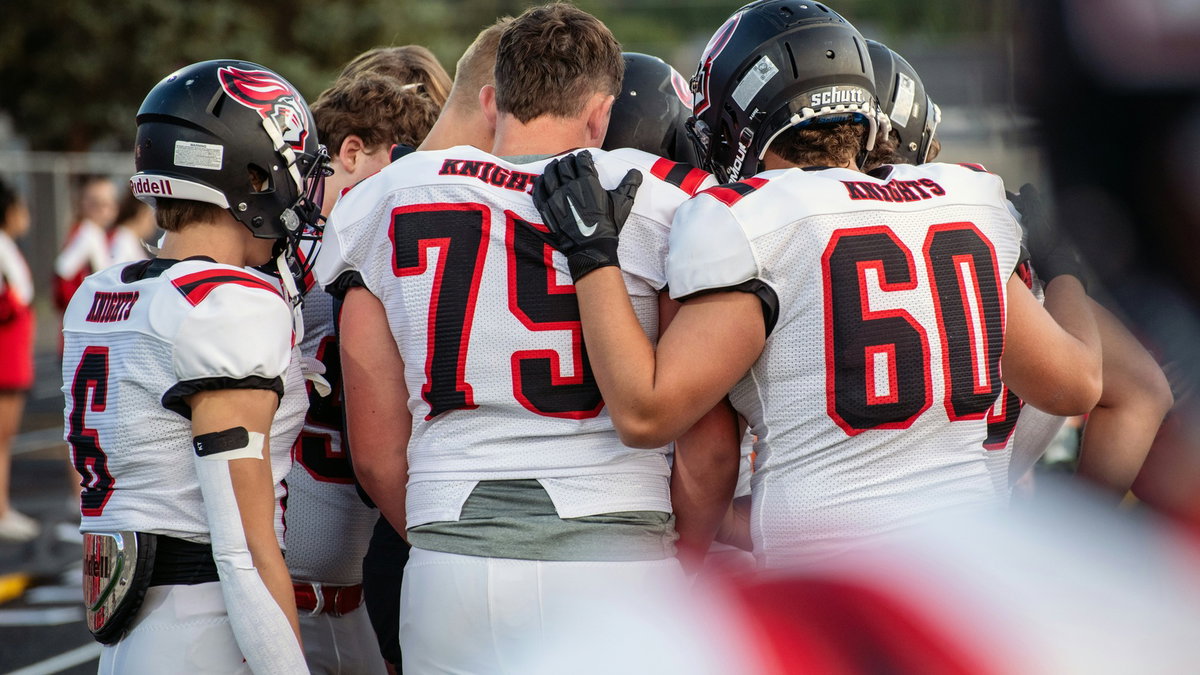
Calm adult support can lower the emotional temperature around high-stakes games.
Lower the emotional temperature first
Before giving advice, help your athlete’s nervous system hear that this is not an emergency. A simple sentence can do more than a long speech: “This matters, but it does not decide everything.” Or, “We can prepare seriously without treating one weekend like your whole future.”
Avoid trying to erase the pressure by saying, “Do not worry about it.” They are worried because the event does matter to them. The goal is not to pretend it is small. The goal is to keep it from becoming enormous in their mind.
If your athlete goes quiet, this may connect with the kind of sports-parent silence ISNation talks about in the hardest part of sports parenting in hard moments. Silence is not always attitude. Sometimes it is a young person trying to carry pressure they do not yet know how to explain.

Preparation matters, but one showcase is still information, not a verdict.
Help them choose controllables that are actually controllable
Many athletes are told to “control what you can control,” but that phrase can become empty unless you make it specific. Before the event, help your athlete name three things they can own: their warmup, their effort between mistakes, their body language after a play, their communication with teammates, their fuel, their sleep routine, or the way they reset after an error.
Then name three things they do not own: who watches, who emails back, whether another athlete has a better day, whether a coach already has a roster need, or whether one mistake happens at the wrong time. This is not lowering standards. It is protecting their mind from taking responsibility for things no athlete can fully command.
You can ask, “What would make you proud of how you handled the day even if the outcome is unclear?” That question gives your athlete a performance target that includes mental fitness, not only exposure.
Do not turn the car ride into a scouting report
After a showcase, parents often want to process. Your athlete may not. They may be exhausted from performing, watching, comparing, waiting, and wondering what everything meant. If the first conversation is a full review of every missed chance, they may feel like the evaluation continued all the way into the car.
Try starting smaller: “Do you want feedback, food, quiet, or company?” If they choose quiet, let quiet be support. If they choose feedback, ask what they noticed first before giving your view. Your role is not to become another evaluator. It is to help them return to themselves after being evaluated.
This is especially important if they are already showing signs of burnout: irritability, sleep trouble, persistent fatigue, dread before training, or loss of joy. Dr. Joel Brenner, writing with the American Academy of Pediatrics Council on Sports Medicine and Fitness, explains through HealthyChildren.org that overtraining can involve persistent fatigue, impaired sleep, mood changes, and decreased well-being. Those signs deserve attention, not more pressure.
Keep the future open without making false promises
It is tempting to reassure your athlete by promising that coaches noticed, that everything will work out, or that one mistake did not matter. You may be right. You may not know. A steadier version is: “We do not have all the information yet, and we do not have to turn uncertainty into a story about your worth.”
That sentence matters because recruiting and showcase environments can make athletes feel like they are constantly being ranked as people. They are not. They are being evaluated for fit, timing, needs, development, and many factors they may never see.
If disappointment comes, let it be real. You do not have to rush them into gratitude or perspective. Start with Love by staying close enough that they do not have to be impressive to be cared for. One showcase may shape a next step. It should not be allowed to define the person taking it.
Soft ISNation CTA
If this is the kind of pressure your family, team, or athlete is carrying, ISNation is built to support the person behind the performance with practical mental fitness tools, real athlete stories, and expert guidance. Download ISNation and start with love in the moments that matter most.