
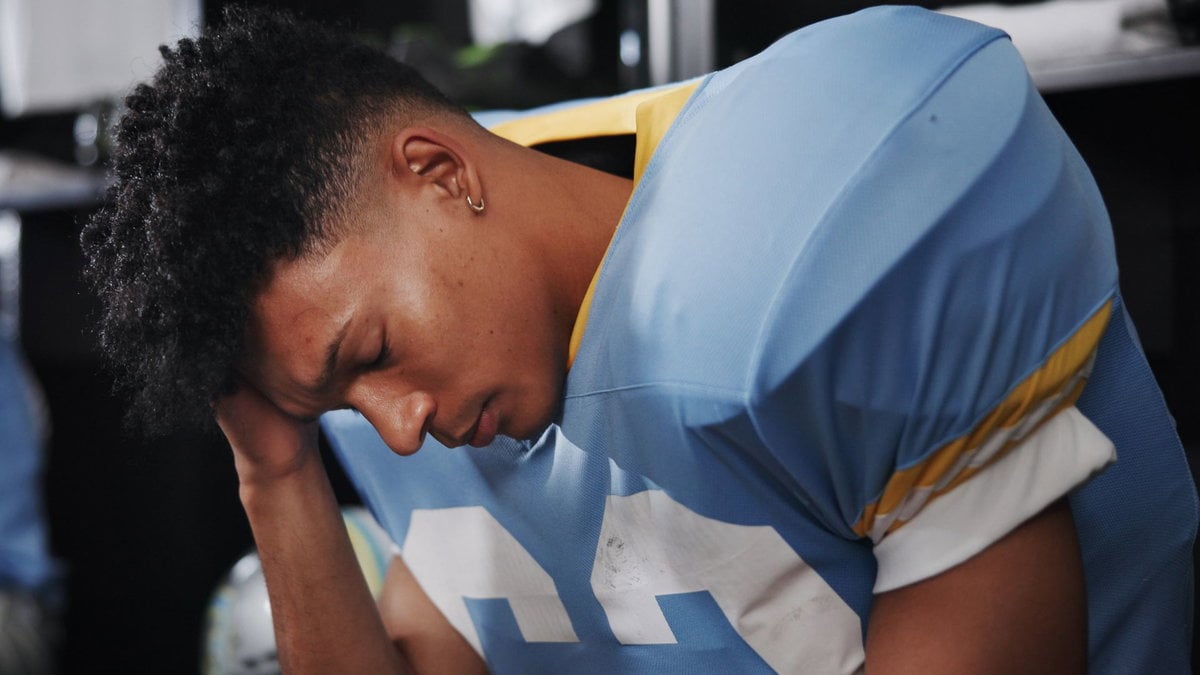
Key Takeaway: When an athlete says "I do not care" before something that clearly matters, the goal is not to argue them into honesty. The goal is to hear the pressure underneath the shrug. Parents help most by lowering the emotional temperature, protecting connection, and making it safer for their athlete to tell the truth about fear, pressure, or uncertainty.
The bag is packed. The game is in an hour. Maybe it is a tournament game, a tryout, a showcase, or just one of those nights you know has been living in your athlete’s head all week. You ask how they are feeling and get the shrug. "I do not care." Maybe they say it again when you mention the opponent, the coach, or the pressure. The words are flat, almost bored. But the body tells a different story.
Parents know this feeling. You can tell they do care. You can see it in how quiet they are, how many times they retie the same shoe, how quickly they snap, or how hard they try to sound casual. That is what makes the moment confusing. If they care, why pretend they do not?
Often because saying "I do not care" feels safer than saying, "This matters so much that I am scared to mess it up." Sometimes it is not indifference at all. Sometimes it is emotional armor.
What can be hiding underneath the shrug
In the American Academy of Pediatrics guide Creating Calm: How to Talk With Your Child When They’re Stressed, Rachel Gilgoff, MD, FAAP, and Devika Bhushan, MD, FAAP, explain that stress can push kids into fight, flight, or freeze responses, where the thinking part of the brain goes offline and protection takes over. In sports, that protection does not always look dramatic. It can sound like distance. It can sound like, "Whatever." It can sound like, "I do not care."
That makes sense when you think about what caring means to a young athlete. Caring means risk. If the game matters, then mistakes matter. Coach reactions matter. Playing time matters. Comparison matters. If your athlete is already carrying nerves, disappointment, or fear of letting someone down, acting detached can feel like a way to lower the stakes before the moment even starts.
This is why parents should be careful not to hear the sentence too literally. "I do not care" is sometimes honest. But in a lot of sports-parent moments, it is more like a shield than a report.
Why arguing about it usually makes things worse
The instinct to push back is understandable. You may want to say, "Yes, you do care," or "Do not take that attitude with me." But if the athlete is using that line to protect themselves, arguing with the line can accidentally intensify the feeling underneath it. Now they are not just stressed about the event. They are stressed about the event and the conversation.
In the Child Mind Institute guide Parenting a Defiant Teen: Expert Tips, clinical psychologists Morgan Eldridge, PhD, and Heather Bernstein, PsyD, explain that behavior that looks defiant often has a function underneath it, and that parents do better when they avoid treating the moment like a personal attack. That principle matters here. The flat answer may be frustrating, but it is often less about disrespect and more about dysregulation.
This does not mean you excuse every sharp tone or every rude comment. It means you respond to the pressure first, then the delivery. Home does not have to become another place where your athlete feels evaluated, corrected, or forced to perform calm.
What helps instead
Reflect the pressure without forcing a confession: "You do not have to talk a lot, but I can tell this one matters."
Give them a support choice instead of a lecture: "Do you want quiet, encouragement, or a distraction on the way there?"
Separate emotion from behavior: "You are allowed to feel tense. You are not in trouble for that."
Keep the pregame environment simple: fewer performance questions, more steadiness, more normal rhythm.
You can also come back later, when the moment is over and the body is no longer braced. Try something like, "Earlier, when you said you did not care, I wondered if that was your way of protecting yourself." That kind of follow-up gives your athlete language without forcing it in the hottest part of the moment.
What your athlete learns from this over time
When parents stop fighting the armor and start listening for what is under it, athletes learn that honesty is safer than pretending. They learn that they do not have to choose between looking tough and being known. And they learn that pressure can be shared before it spills out sideways.
That does not happen in one perfect car ride. It happens through repetition. Calm response after calm response. Curiosity instead of correction. A steady home where "I do not care" can slowly become, "I care more than I know how to say."
If your athlete keeps covering big feelings with "I do not care," ISNation can help you turn those moments into trust instead of more pressure. Download ISNation for practical support that helps parents stay steady before the moments that matter most.