

While in today’s game, most players are expected to be versatile, traditionally the small forward is the most versatile player on a basketball team. Small forwards must be proficient at driving the ball, shooting, and playmaking. As a ‘jack of all trades’ player, the small forward is expected to excel in various aspects of the game, including multiple defending positions.
Key Responsibilities on Offense
The small forward role as a scorer is to be a threat anywhere on the court. This means that they must shoot the ball well enough so that the defense doesn’t feel comfortable leaving them open at the 3-pt line. At the same time, they must dribble and drive to the basket well enough that playing defense too close is a mistake as well.
Having a player like this on the court allows you to spread the defense out well, and have the small forward take up any position on the court when drawing up your offensive plays.
Role on Defense
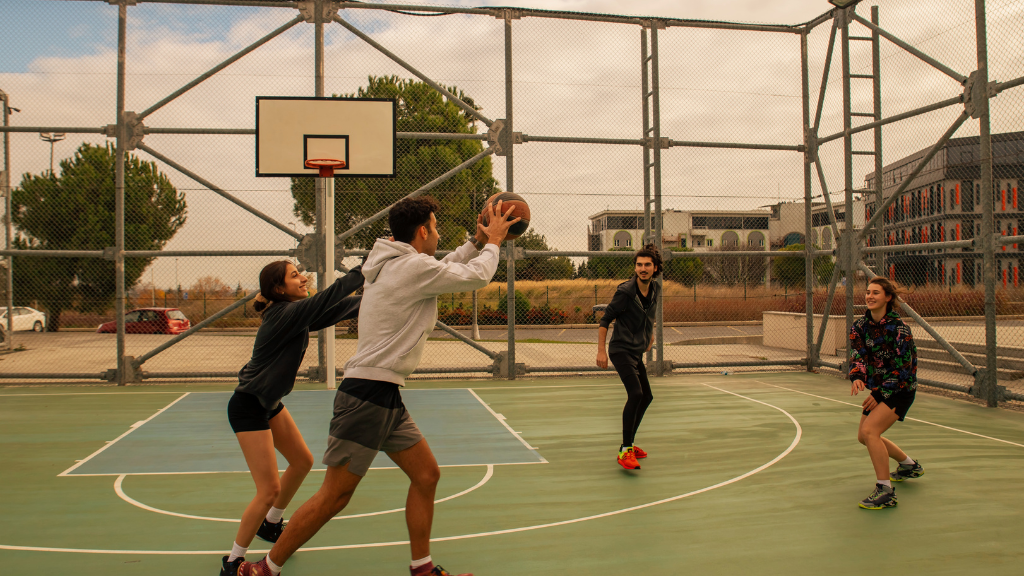
Small forwards are trained to defend various positions on the court. They typically guard opposing small forwards, power forwards, and shooting guards. These players must have a combination of strength and speed along with quick lateral movements to defend effectively.
On a 2-3 zone, the small forward is traditionally placed at the baseline on either side of the center.
On a 1-3-1 zone, they are typically on either wing, or the top of the zone.
Physical Attributes
Similar to the shooting guard, they don’t need to be the tallest player on the court, but rather need speed and agility. A small forward would benefit from long arms, strength, and height to effectively navigate the court, make shots, and defend other players at various positions.
Important Skills
As highlighted by the phrase ‘jack of all trades’, small forwards must be skilled at everything on the offensive end of the court, with talents in passing, dribbling, scoring. They traditionally weren’t used in the post so they don’t need post-up scoring ability. However, in today’s game you’ll often see guards like Luka Doncic scoring by backing up their defender in the paint.
More important than raw strength is their ball handling abilit, and court vision to make quick strategic decisions to read the game for potential scoring opportunities.
Who Are the Best Small Forwards of All Time?
The term ‘best’ is subjective, but we can outline the best basketball small forwards based on their statistics across total points scored, points per game on average, and longevity as a player across games played:
Best small forwards based on rings (championships) won:
- John Havlicek – 6
- Scottie Pippen – 6
- Jim Loscutoff – 6
All 3 are tied at 6 rings each.
Best small forwards according to points per game on average:
- Kevin Durant – 27.8
- LeBron James – 27.5
- Elgin Baylor – 27.4
Small forwards according to games played in their career:
- LeBron James – 1,283
- Eddie Johnson – 1,199
-
Small forwards ranked by total points scored in their career:
- LeBron James – 35,279
- Kevin Durant – 27,300
- Dominique Wilkins – 26,668